Computer Science · Years 1–12
Online Computer Science Tutoring — Code It, Don’t Just Read It
Live 1-to-1 computer science lessons matched to your child’s level and curriculum — in the UK, Australia and Saudi Arabia. From first Scratch blocks to real Python projects and exam theory, learned by building.
Why Computer Science with VCI
Coding is learned by coding — with a mentor beside you
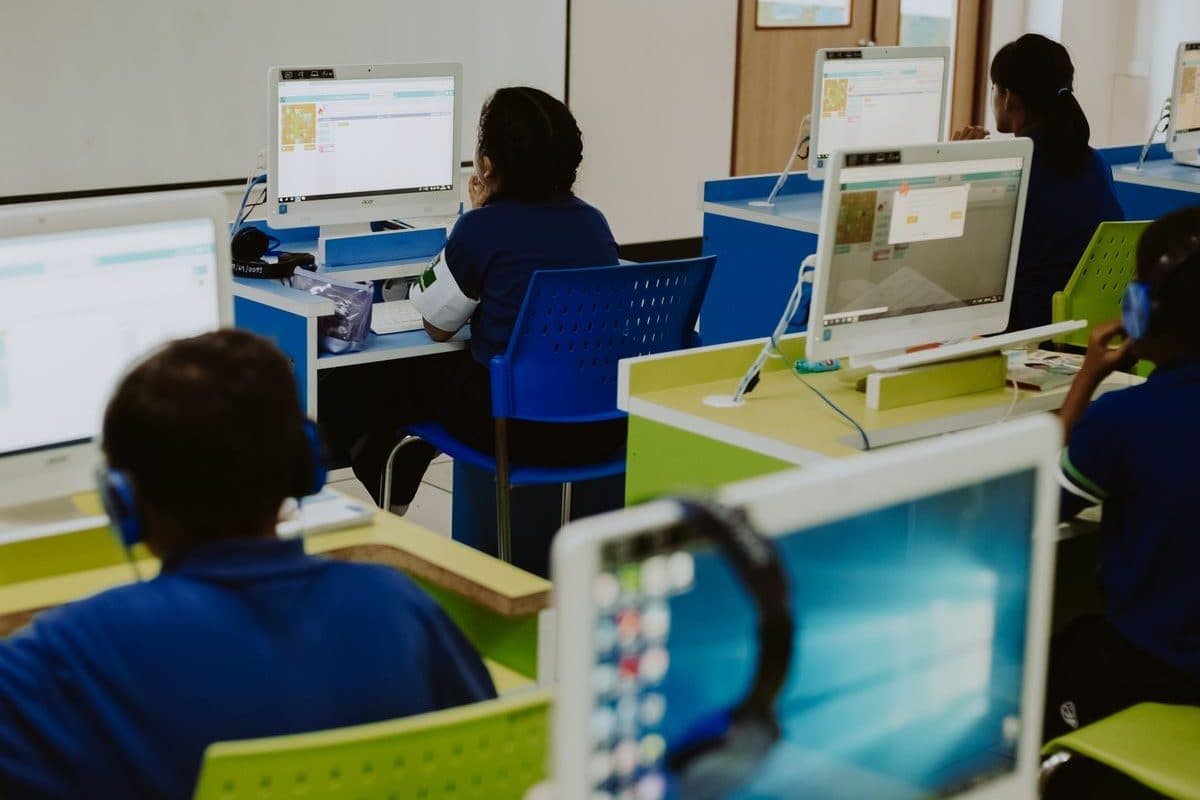
Computer science is the one subject where watching is almost useless: students learn by writing code, breaking it, and fixing it. In a classroom of thirty, a child stuck on one error can lose a whole lesson. Online tutorials help — until the first question nobody answers.
Our 1-to-1 CS tutoring pairs your child with a real mentor. They code together on a shared screen, build projects they are proud of, and learn the theory (how computers store data, how networks work, how algorithms think) alongside the practice. In the free trial class we check your child’s level — total beginner or already coding — and design the path from there.
Parents receive a short progress update after every class, so you always know what was built and what was learned.
What we cover
Computer Science at every stage
The same subject, taught at the right depth for each stage of school.
Primary Coders
Playful beginnings with serious foundations: logic, sequencing and first real projects in Scratch.
- Unplugged logic: patterns, sequences, instructions
- Scratch: sprites, loops, events and variables
- Simple games and animations they design themselves
- Typing and computer confidence
- E-safety and responsible technology use
- First steps into typed code for keen learners
Secondary Computer Science
Real programming plus the theory schools examine: Python, data, networks and how computers actually work.
- Python: variables, loops, conditions, functions
- Problem decomposition and algorithm design
- Data: binary, images, sound and storage
- Hardware, software and operating systems
- Networks and the internet, explained properly
- School project and coursework support
- GCSE Computer Science preparation
Senior Computer Science
Advanced programming and rigorous theory for top grades and future study: data structures, databases and exam mastery.
- Advanced Python: lists, dictionaries, files, OOP basics
- Sorting, searching and algorithm efficiency
- Databases and SQL
- Boolean logic and computer architecture
- Networks, security and ethics in depth
- Timed exam practice and project mentoring
- Senior Digital Technologies / Software preparation
- A-Level Computer Science preparation
Full syllabus
Computer Science topics we teach — A to Z
Every topic below is taught 1-to-1 and matched to your child’s school curriculum and year level.
Programming
- Scratch blocks to typed Python
- Variables, input/output and data types
- Selection (if/else) and iteration (loops)
- Functions and decomposition
- Lists, dictionaries and files
- Debugging like a professional
- Mini-projects: games, quizzes, tools
Thinking Like a Computer Scientist
- Algorithms and flowcharts
- Pseudocode in exam style
- Searching and sorting
- Logic gates and Boolean algebra
- Abstraction and pattern spotting
Data & Machines
- Binary and hexadecimal
- How images and sound are stored
- CPU, memory and storage
- Operating systems and software types
- Compression and encryption basics
Networks, Web & Exams
- Networks, the internet and the web
- HTML/CSS first web pages
- Cyber security and e-safety
- Ethics, law and the environment
- GCSE CS theory mastery
- Exam technique: trace tables & code questions
The VCI difference
Why parents choose VCI for Computer Science
True 1-to-1 attention
A mentor watches your child’s screen as they code — catching bad habits, celebrating working programs, and never letting one error eat a whole lesson.
Matched to your curriculum
For school students, lessons follow the official curriculum of their own country and school in the UK, Australia and Saudi Arabia; for pure coding goals, we follow a proven project path. Either way, the plan is personal.
Projects, not just exercises
Games, quizzes, animations and tools your child chooses and builds — motivation comes built-in, and every project teaches real concepts.
Start free, no lock-in
Your first trial class is completely free, and plans run month to month — no enrolment fees and no lock-in contracts. Try a real lesson first, then decide.
Simple process
How Computer Science tutoring works
Three steps between you and a more confident child.
Book a free trial
Tell us your child’s age and any coding experience (none is fine!) — the trial lesson doubles as a level check, and your child builds something real in it.
Get a personal plan
We show you the level we found and the project path or curriculum plan ahead, and match your child with the right CS tutor.
Learn, track, improve
Live 1-to-1 classes follow the plan, and you receive a short progress update after every class.
Want to meet the teachers first? See our tutors → · How online lessons work →
Computer Science tutoring — frequently asked questions
Everything parents usually ask before the first class.
Your child joins a live video lesson and codes on a shared screen with the tutor, who can see every line, guide corrections and run the program together. Beginners start in Scratch; older students use Python in the browser — no special software to install.
With success in the first ten minutes. Young beginners start with Scratch games; older beginners start Python through small, satisfying projects. The free trial tells us exactly the right starting point for your child’s age and experience.
School plans are matched to your child’s country, school year and syllabus — we currently teach students in the UK, Australia and Saudi Arabia, including GCSE Computer Science in the UK. Many families also choose CS purely as a future skill; then we follow our project-based path and report skills gained after every class.
A laptop or desktop with a browser and internet connection is enough — Chromebooks work fine for Scratch and browser-based Python. A tablet alone is not ideal for coding.
Yes. Tutors mentor students through planning, coding and documenting their own project — guiding and teaching, so the work stays genuinely the student’s.
Yes — completely. The trial is a full, real lesson, not a sales demo: your child builds something real with a tutor, we assess their level, and afterwards we show you the plan. There is no payment and no obligation to continue.
Keep reading
More about Computer Science and learning
How Much Does Tutoring Cost in Australia? (2026 Guide)
Real prices for private tutors, centres and online tutoring — and the hidden fees to watch for.
Read more →NAPLAN Preparation: When Should Your Child Start?
The honest month-by-month timeline our tutors recommend for Years 3, 5, 7 and 9.
Read more →Explore All Subjects
English, Science, Physics, Chemistry, Biology, Computer Science, Quran and Urdu — all 1-to-1.
Read more →Start with a free computer science trial class
One real lesson tells you more than any page can. Your child will build something in the very first class — free, with no obligation.