
End-of-Year School Reports: How to Read Them & What to Do Next
VCI Team
16 Nov 2026 · 7 min read
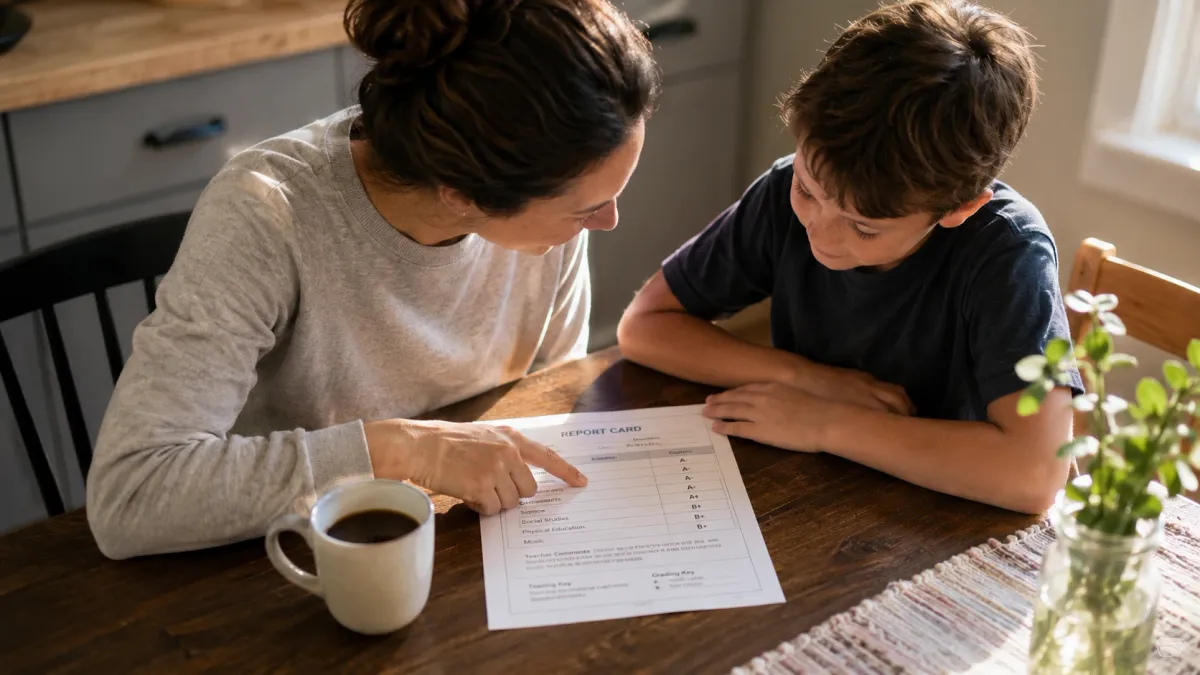
End-of-year reports are landing in inboxes and school bags right now, and most get the same treatment: a quick scan of the grades, a flick through the comments, then onto the fridge or into a drawer. That is a waste. Read properly, the December report is the single most useful planning document of the school year — it tells you exactly what to protect, what to fix, and what to ignore over the holidays.
This guide explains how to read an Australian school report the way teachers write it: what the grades actually mean, why the comments carry the real information, and the simple four-week plan that turns this year's report into next year's head start.
First, the grades: what A–E actually means
Most Australian schools report achievement on an A–E scale (Victoria uses curriculum levels with an "at standard" marker, but the logic is the same). The scale is widely misunderstood, so here is the honest version:
- A — working well above the expected standard for the year level.
- B — working above the expected standard.
- C — working at the expected standard. This is the benchmark, not a mediocre result.
- D — working below the expected standard; support is needed.
- E — working well below the expected standard; significant support is needed.
Two consequences follow. First, a report full of Cs with positive comments usually describes a child who is exactly where they should be — not a problem to solve. Second, grades are measured against the year-level standard, not against last term. A child can genuinely improve and still receive the same grade, because the standard moved too. That is one reason the comments matter so much.
The comments are the real report
Grades compress a year of learning into five letters. Comments are where the teacher tells you the specifics. When you read them, look for three things:
- Named skills. "Is developing confidence with fractions" or "writes simple sentences but is beginning to use paragraphs" tells you the exact topic to work on. Vague praise ("a pleasure to teach") is lovely but not actionable.
- The same phrase twice. If last year's report and this year's report both mention reading comprehension, handwriting, or times tables, that is no longer a phase — it is a pattern, and patterns are what holidays are for.
- Effort versus achievement gaps. Most reports grade effort separately from achievement, and the gap between the two is the most diagnostic number on the page (more on this below).
Effort vs achievement: the four combinations
Put the effort grade and the achievement grade side by side and you get one of four stories, each with a different response:
| Pattern | What it usually means | Best response |
|---|---|---|
| High effort, high achievement | Everything is working | Celebrate, maintain over summer, no changes needed |
| High effort, low achievement | Trying hard but a skill gap is blocking progress | Find and fix the specific gap — this is where targeted help pays off fastest |
| Low effort, high achievement | Coasting — often boredom or work that feels too easy | More challenge and stretch, not more of the same work |
| Low effort, low achievement | Disengagement — frequently a gap that has made work feel impossible | Rebuild confidence with small wins at the right level before anything else |
The high-effort/low-achievement row deserves emphasis, because it is the most commonly misread. Parents often respond with "try harder" to a child who is already trying hardest of all. What that child needs is diagnosis: which exact skill — decoding, number facts, paragraph structure — is blocking everything downstream? That is a fixable problem, and the holidays are the calmest time to fix it.
Your four-week plan after the report arrives
- Week 1 — talk to your child first. Before any adult analysis, ask them how they think the year went. Children usually know their report before you read it, and the conversation goes better when they speak first. Lead with what improved.
- Week 2 — choose at most two priorities. Not five, not "maths and English" in general — two specific things, ideally named in the comments: "secure times tables", "read chapter books fluently", "write in paragraphs". Two priorities get done; five get resented.
- Weeks 3–4 — set the light holiday routine. Match the priorities to the gentle rhythm that prevents the summer slide: daily reading, short maths practice a few times a week, and any targeted work aimed squarely at your two priorities.
- January — check and adjust. Two weeks before term, notice what has stuck. If a priority has not moved despite regular effort, that is the signal to get a second pair of eyes on it before the new year buries it under new content.
When a report is a genuine warning sign
Most reports need perspective, not panic. But treat these three patterns seriously:
- The same weakness two years running. One year is a phase; two is a gap that will keep taxing every new topic built on it.
- High effort, low achievement in reading or number basics. This combination can point to an underlying difficulty that deserves proper assessment — raise it with the school early in the new year, and start support in the meantime rather than waiting.
- A sudden drop across several subjects at once. That pattern is rarely about ability. Something changed — friendship trouble, eyesight, hearing, sleep, confidence. The fix starts with finding out what.
In all three cases, the worst response is waiting until Term 2 to see whether it sorts itself out. The best is a small, specific intervention started while the year is still young — or, right now, over the holidays.
How we use reports at VCI
When a family joins Virtual Career Institute, the end-of-year report is the first thing we ask to see. It tells our tutors where to start the free trial lesson, which gaps to test first, and what progress should look like by the end of term. Lessons are 1-to-1 and online, with a progress update after every class, and plans start from A$60 a month — see pricing for the details. If this year's report raised a question you cannot quite answer, a free trial class will give you a straight one.
Frequently Asked Questions
Quick answers to the questions parents ask us most about this topic.
No. On the A–E scale, C means your child is working at the expected standard for their year level — that is the benchmark schools aim for. A report of Cs with strong effort grades and positive comments describes a child who is on track.
Comments. Grades tell you where your child sits against the year-level standard; comments tell you which specific skills are strong, which are developing, and what to work on next. Always read the comments for named skills, and compare them with last year's report to spot repeating patterns.
High effort with low achievement usually means a specific skill gap is blocking progress — not a lack of trying. The next step is diagnosis: identify the exact skill (for example number facts, decoding, or paragraph writing) and target it directly. This pattern responds very well to 1-to-1 support because the teaching can aim at the one blocking skill.
Two at most. Pick the two specific priorities named in the comments, build a light holiday routine around them, and review in January. Long lists of weaknesses overwhelm children and parents alike and rarely survive the second week.
If something is unclear or worrying, yes — a short, specific question ("which maths topics should we practise over summer?") gets a useful answer. Teachers are winding down too, so if you miss them before term ends, raise it in the first fortnight of the new year, while there is still time to act on the answer.
When the same weakness appears two years in a row, when high effort produces low achievement in reading or basic number skills, or when grades drop suddenly across several subjects at once. Each of those patterns has a cause, and all of them respond better to early, specific help than to waiting.
A school report is not a verdict — it is a map. Read the comments, pick two priorities, and use the holidays lightly and well, and this December's report becomes next year's advantage. If you would like help turning it into a plan, book a free trial class and bring the report with you.
VCI Team
The Virtual Career Institute team of certified tutors and education specialists — helping students across the UK, Australia, Saudi Arabia, UAE, USA, Qatar, and Canada achieve their academic goals.
Need help with this topic?
Book a Free Trial