Year 7 English in Australia: The Jump to High-School English
VCI Team
28 Oct 2026 · 6 min read

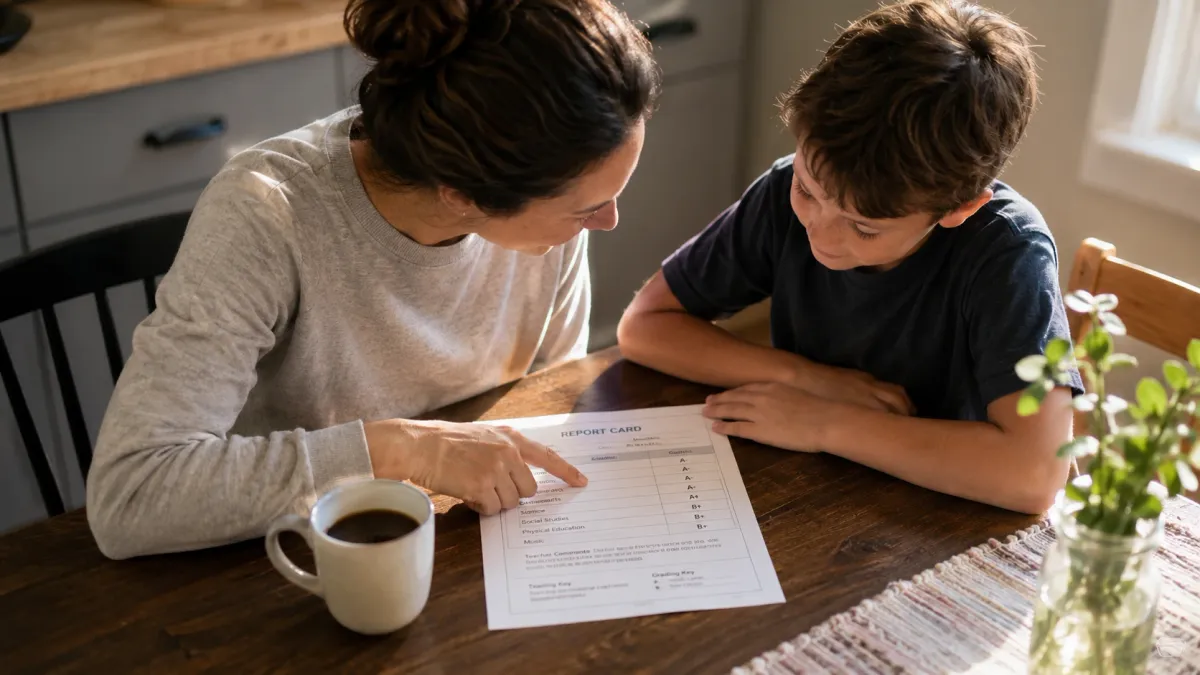
Year 7 English surprises a lot of families. A child who read happily and scored well in primary school suddenly brings home ordinary marks — not because their reading has got worse, but because the subject has changed underneath them. Essays replace book reports, and “What happened in the story?” becomes “How does the author make you think that?” Nobody hands students a manual for the transition; they are simply expected to pick it up. This guide explains what high-school English actually demands, where new Year 7 students typically lose marks, and what helps them find their feet.
Why Year 7 is a turning point
High-school English marks analysis, not summary. Students study whole novels and films in depth and are expected to write structured essays about them: a clear argument, organised paragraphs, and quotations used as evidence. Persuasive techniques must be identified in other people’s writing and used in their own. It is a genuine skill set — and for most students it is brand new, arriving in the same term as a new school, new teachers and a heavier homework load.
The encouraging part is that these are teachable techniques, not talents. Essay structure, quoting evidence and analysing language follow learnable patterns, and once a student has them, they apply to almost every English task for the rest of school. Students who crack the code in Year 7 tend to stay in front; students who keep writing the way they did in primary school tend to plateau, however strong their reading is.
It is worth saying plainly to your child: a dip in Year 7 English marks is information, not a verdict. It almost always means the old primary-school approach has stopped working — and a new approach can be learned, practised and made automatic.
The key skills in Year 7 English
Four areas make up the Year 7 course, and the essay skills in the second group touch almost every mark.
Reading & Analysis
- Novel study — theme, character and setting
- Inference backed by evidence
- Analysing author choices
- Media and advertising texts
- Comparing perspectives
Essay & Writing Skills
- Essay structure — introduction, body, conclusion
- TEEL paragraphs that flow
- Persuasive writing and speeches
- Creative narratives with control
- Planning and drafting under time limits
Language & Grammar
- Sentence variety and complex sentences
- Clauses, modality and voice
- Figurative language in action
- Formal versus informal register
- Proofreading and editing routines
Viewing & Speaking
- Film techniques — camera, sound, framing
- Visual texts and image analysis
- Class presentations and debates
- Discussion and questioning skills
- Vocabulary for analysis
Where Year 7 students usually get stuck
- Retelling instead of analysing. The most common mark-loser of all. The student understands the novel and describes the plot accurately — and is marked down, because the task asked what the author is doing, not what happens.
- Essays with no skeleton. Ideas arrive in the order the student thought of them, paragraphs start and stop at random, and the conclusion simply stops. The knowledge is there; the structure is not.
- Opinions without evidence. High-school marking expects a claim, a quotation and an explanation of how the quotation proves the claim. Students who skip the middle step write essays that sound like book reviews.
- Falling behind the class novel. A whole novel on a deadline is new in Year 7. Students who fall a few chapters behind stop following class discussion — and the essay at the end becomes guesswork.
- Persuasion that only spots, never uses. Many students can label a rhetorical question in an advertisement but cannot deploy one in their own speech. Analysis and writing have to be practised together.
NAPLAN in Year 7
Year 7 students also sit NAPLAN in their first term of high school — Reading, Writing and Conventions of Language. NAPLAN 2027 runs from 10 to 22 March 2027; our NAPLAN 2027 dates and prep schedule covers the window and a calm build-up. The overlap is good news: the comprehension, sustained writing and grammar that NAPLAN measures are exactly the skills Year 7 English is building anyway, so steady English work doubles as preparation, with a little online-format and timed practice added before March. Our NAPLAN tutoring page explains the approach in more detail.
What parents can do at home
- Keep recreational reading alive. Any reading — novels, sport, gaming books — maintains the fluency and vocabulary that analysis is built on. Fifteen minutes a day still counts.
- Ask “What’s your evidence?” Make it a friendly family habit, about books, news or anything else. It is the single most useful question in high-school English.
- Talk about persuasion when you meet it. Advertisements, speeches and headlines are a free masterclass. Ask what a text wants you to feel, and how it is trying to do it.
- Normalise planning before writing. Five minutes of dot points before an essay feels slow to a twelve-year-old and saves twenty minutes of tangled drafting. Planning is what strong writers actually do.
- Stay close to the class novel. Read it yourself, or ask for a two-minute chapter summary over dinner. A student who talks about the book keeps up with it.
Frequently Asked Questions
Quick answers to the questions parents ask us most about this topic.
Because high-school English marks analysis, not reading. A student can understand a novel perfectly and still lose marks for retelling the plot, writing unstructured essays or giving opinions without evidence. These are teachable techniques — once a student learns essay structure and how to use quotes, marks usually recover.
Yes. Lessons are matched to what your child is actually studying — their current class novel, the techniques their teacher is covering and their upcoming assessments — so tutoring reinforces school instead of competing with it.
Yes. The year-round work builds the underlying skills NAPLAN measures — comprehension, sustained writing and grammar — and timed, online-format practice is added before the March window so the test feels familiar.
Lessons are live and 1-to-1, with the same tutor each week. It starts with a free trial class, where the tutor runs a level check and builds a personal plan from it. After every class you receive a progress update, so you always know what was covered and what comes next.
Plans are A$60 per month for 4 sessions, A$100 per month for 8 sessions, or A$150 per month for 12 sessions. The first trial class is free, so you can see exactly how it works — and where your child stands — before paying anything.
If your child’s marks have dipped since starting high school, our online English tutoring page explains how the 1-to-1 lessons teach the new rules of the game — or you can book a free trial class and receive a level check and a personal plan, with no obligation to continue.
VCI Team
The Virtual Career Institute team of certified tutors and education specialists — helping students across the UK, Australia, Saudi Arabia, UAE, USA, Qatar, and Canada achieve their academic goals.
Need help with this topic?
Book a Free Trial